
CHEMICAL DEFINITION OF SOAP
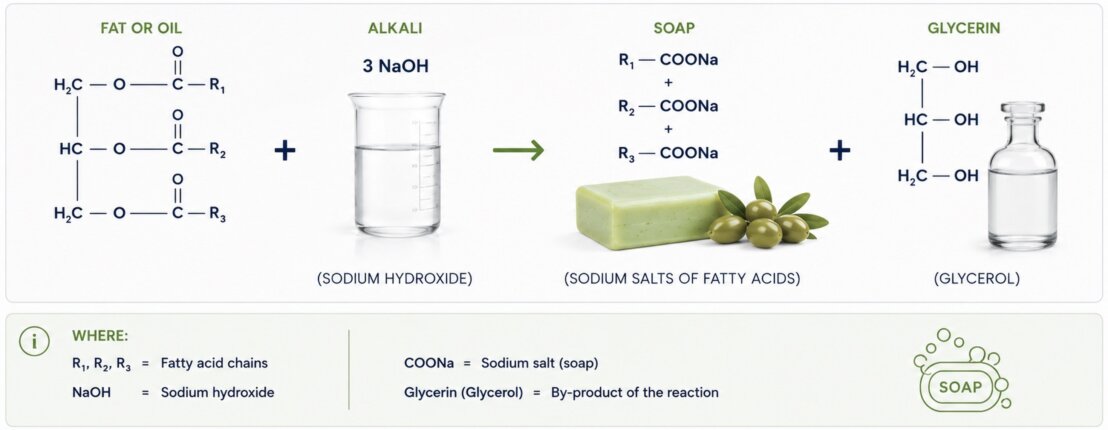
Saponification is the chemical reaction between fats or oils and an alkali such as sodium hydroxide (NaOH) or potassium hydroxide (KOH), producing soap and glycerin.
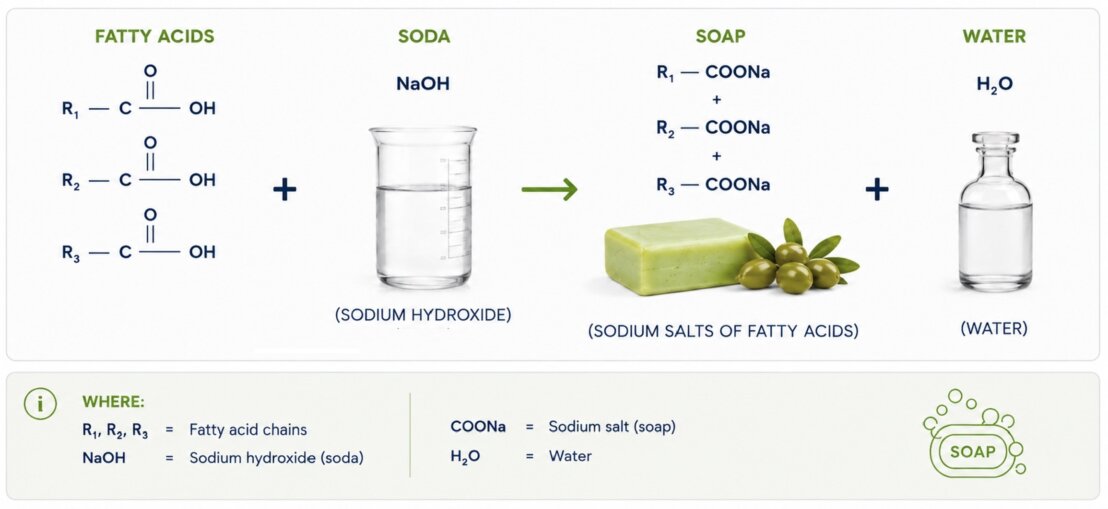
Neutralization is the chemical reaction between fatty acids and an alkali such as sodium hydroxide (NaOH), producing soap and water.
WHAT IS SOAP
Soap is a salt of a fatty acid. Soap is mainly made by two processes:
SAPONIFICATION: the reaction of Neutral Oil with Alkali (i.e. Caustic Soda)Vegetable Oils / Animal Fats + Caustic Soda = Soap + Glycerine.NEUTRALIZATION: the reaction of a Fatty Acid with Alkali (i.e. Caustic Soda)Fatty Acids + Caustic Soda = Soap + Water.
Neutral Oils are composed by triglycerides: Fatty Acids and Glycerine. The fatty acids used in soap manufacturing have carbon chains composed from 8 to 20 carbons.
Soap produced using Neutral Oils (Vegetable Oils / Animal Fats) as raw materials contains some points of glycerine; soap produced using Fatty Acids as raw materials does not contains glycerine.
Knowledge Content – Browse by Topic
01. WHAT IS SOAP
02. RAW MATERIALS USED IN SOAP MANUFACTURING
07. SOAP DRYING AND COOLING
08. SOAP FINISHING LINE
09. SOAP PACKAGING